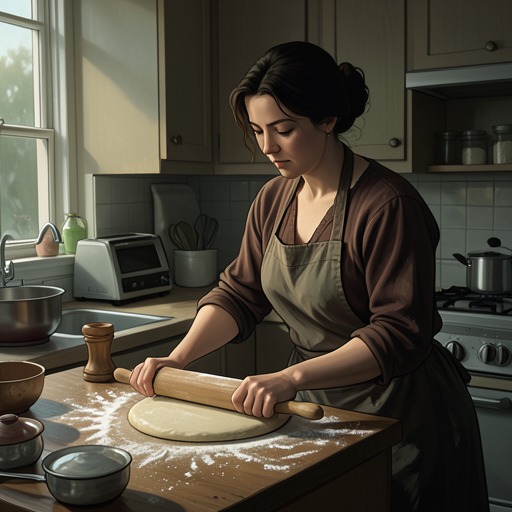
Christmas rolls
Like Water for ChocolateChristmas rolls are a sardine-and-sausage-filled family dish that carries the history of Tita’s life from her birth in the kitchen to the cookbook that preserves her story. Their power is not only culinary: their smell recalls the past, their making gathers the women of the household, and their familiar comfort fails when Tita confronts the loss of the future she had imagined.
Recipe and Preparation
The recipe calls for sardines and ten hard rolls. The sausage is fried over very low heat so that it cooks through without becoming too brown. Once removed from the heat, it is combined with sardines that have already been deboned and scraped clean of any black spots. Chopped onion, chiles, and ground oregano are added, and the filling is left to stand before it is put into the rolls.
The onion also introduces a characteristic hazard of the preparation: chopping it can set off tears that are difficult to stop. The recipe offers a practical remedy, placing a little piece of onion on the head, while also treating the tears as part of family memory. Tita is remembered as exceptionally sensitive to onions, a sensitivity linked in the family story to the tears that accompanied her arrival in the world. The recipe therefore gives both a kitchen instruction and a route into the history attached to the dish.
A Dish Made for the Family
Christmas rolls are usually prepared around Christmas, but the family makes them for Tita’s birthday, when she is about to turn sixteen. The occasion brings the dish into a decisive moment: while the women are preparing it, Mama Elena rejects the possibility of Tita marrying Pedro and declares that, as the youngest daughter, Tita must care for her until her death. Tita continues cutting the rolls while Chencha relays what she has heard. The work of preparing food proceeds alongside the announcement that will deny Tita a life of her own choosing.
The rolls belong to a larger pattern of collective kitchen labor. Sausage making begins the day before, with the women of the household peeling garlic, cleaning chiles, and grinding spices. Mama Elena, her daughters Gertrudis, Rosaura, and Tita, the cook Nacha, and the maid Chencha gather around the dining-room table. The preparations create time for conversation and joking, even as the work is organized by the household’s hierarchy and its expectations of women. The dish is both a shared family practice and one of the routines through which that family is sustained.
Childhood, Smell, and Consolation
As a child, Tita plays cooking games with Nacha after Mama Elena forbids her to play with her sisters. They shape sausages into fanciful animals, and Tita resists taking the figures apart for frying. Christmas rolls are the exception: when the sausages are meant for the dish she loves, she willingly lets the animals be dismantled and watches them fry with delight. Even this childhood episode connects food to feeling: the dish gives a welcome purpose to an act that otherwise saddens her.
The filling’s aroma brings Tita into contact with memories that seem older than conscious recollection. She cannot remember the first time she smelled the rolls and imagines that the combination of sardines and sausage may have drawn her toward life in the family before she was born. Smell becomes a way of returning to a past that cannot be recalled as an ordinary scene, joining appetite to the story of her entrance into the world.
Nacha understands the rolls as a comfort that has worked before. After Tita acknowledges her love for Pedro and realizes that she must give him up because he is to marry Rosaura, she tries to settle herself with a Christmas roll and milk. This time, eating brings no relief. The emptiness she feels is not hunger but grief, and neither food nor layers of clothing can warm her. She works on the crocheted bedspread she began when Pedro first spoke of marriage, sewing and weeping through the night. The failed comfort makes the dish a measure of the depth of her loss: its customary restorative power cannot undo the separation imposed on her.
Inheritance and Continuing Memory
The dish’s association with desire and memory reaches beyond Tita’s own eating. When Tita’s preparation of quail in rose petal sauce transmits her passion to Gertrudis and Pedro, the narrator describes Tita’s later work on the cookbook she begins that night. The cookbook records precise serving instructions for that separate dish, while Tita’s recipes more broadly turn culinary practice into a form of transmitted experience. Christmas rolls likewise carry an intimate history through an ordinary recipe rather than through an abstract family chronicle.
After the ranch is consumed by fire, Esperanza returns from her wedding trip to find the cookbook beneath the remains and later bequeaths it to her daughter. The daughter prepares Christmas rolls for her own birthday, as her mother had prepared them for her each year. She recalls the flavor, the kitchen’s aroma, and her mother’s stories, and wonders why her own rolls never taste the same and why onions make her tears flow so freely. In that closing recurrence, the dish links the descendant’s kitchen to Tita’s life: the tears that once marked Tita’s birth persist as a bodily echo, while cooking the inherited recipe keeps her story alive.